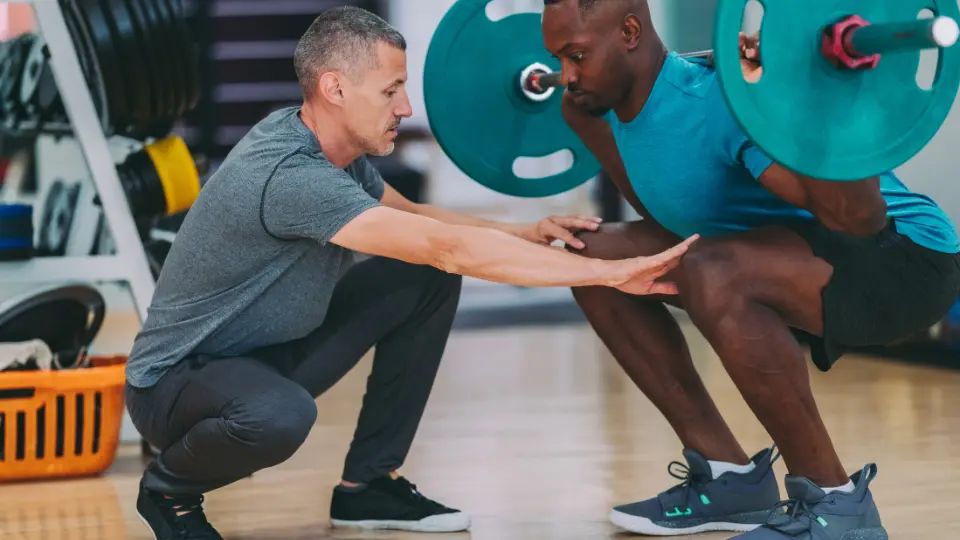
Quick Answer: Yes, beginners can start powerlifting today. Choose a program like Starting Strength or StrongLifts 5x5, start with light weights focusing on proper form, train 3 days per week, and add 5-10 lbs weekly. With consistent training, you'll gain 60-130 lbs across the three lifts in your first 12 weeks.
Table of Contents
- Can Beginners Do Powerlifting?
- How Much Weight Should You Lift?
- Best Powerlifting Programs for Beginners
- Understanding Training Methods
- How to Structure Your Training
- Essential Guidelines
- Your First Powerlifting Competition
- 5 Mistakes That Kill Your Progress
- Your First 12 Weeks: What to Expect
- Common Questions Answered
- Key Takeaways: Your Action Plan
Your Problem + This Guide's Solution
You want to start powerlifting but don't know where to begin. You're asking yourself: Can I do this as a complete beginner? Which program should I choose? How much weight should I lift? What mistakes will waste my time or hurt me?
The answer: Yes, you can start powerlifting today. This guide gives you a proven roadmap. With the right program and proper technique, you'll safely build strength in squat, bench press, and deadlift—even if you've never touched a barbell.
Can Beginners Do Powerlifting?
Yes. Absolutely. Powerlifting works for beginners because it uses three basic human movements: Squat (pushing with legs), Bench press (pushing with arms), and Deadlift (pulling from floor).
What You Need Before Starting
Get 2-3 months of basic gym experience first. Learn how the three lifts work. Master bodyweight movements and light barbell work. Westside Barbell and Starting Strength both recommend this foundation period.
Why Powerlifting Works for New Lifters
You measure progress easily. Did you lift more weight this week? You got stronger. No guessing. You gain strength fast. Beginners add weight to the bar every single workout for the first 2-3 months. This motivates you to keep training.
The community helps you. Powerlifting gyms have experienced lifters who share knowledge and spot your lifts for free.
What You Must Learn
Master these skills: Bracing your core, breathing correctly under load, positioning your feet, controlling the bar path, and activating the right muscles. This takes time. But you'll learn what your body can truly do.
How Much Weight Should You Lift?
Don't compare yourself to others. Your starting weight depends on your current strength and body weight.
Find Your Starting Weight (3 Steps)
Step 1: Start with the empty bar - Use a 45 lb (20 kg) barbell. Do 10 reps with perfect form. If this feels easy, move to Step 2.
Step 2: Add weight gradually - Add 5-25 lbs based on comfort. Do 8 reps. Can you do 3 more reps with good form? If yes, this is your training weight. If no, reduce the weight.
Step 3: Set realistic goals - Add 5-10 lbs per month to each lift. This seems slow but adds up fast. In one year: 60-120 lbs stronger. StrengthLog's beginner program research shows this progression prevents injury while maximizing gains.
What Progress Looks Like
Weeks 1-12 (Beginner phase): Add weight every workout. Squat: +30-60 lbs total. Bench: +15-30 lbs total. Deadlift: +40-70 lbs total.
After 3 months: Progress slows to weekly gains. This is normal. Your body adapts more slowly now.
Don't Do This
❌ Adding 20 lbs because it felt easy
❌ Copying weights from Instagram lifters
❌ Training to failure every session
❌ Skipping the empty bar warm-up
✅ Follow your program's progression
✅ Track your own progress only
✅ Leave 1-2 reps "in the tank"
✅ Always warm up properly
Best Powerlifting Programs for Beginners
Choose a program you'll actually follow. Here are five proven options.
1. Starting Strength
What it is: Add weight every workout to basic lifts.
Structure: Train 3 days per week. Do 3 sets of 5 reps (3x5). Alternate between two workouts. Add 5-10 lbs each session.
You should choose this if: You're a complete beginner. You need to build basic strength fast. You want the simplest program possible.
Mark Rippetoe's Starting Strength (2011) has trained thousands of beginners successfully.
2. StrongLifts 5x5
What it is: Five sets of five reps with steady weight increases.
Structure: Train 3 days per week. Do 5 sets of 5 reps (5x5). Start with light weights. Add 5 lbs per workout.
You should choose this if: You want more practice per lift. You like using apps to track progress. You need built-in deload protocols.
Unique feature: Free app calculates all your weights automatically.
3. Wendler 5/3/1 for Beginners
What it is: Percentage-based training with monthly progression.
Structure: Train 3 days per week. Two main lifts per day. Use percentages of your max. Progress every 4 weeks.
You should choose this if: You want sustainable long-term progress. You hate hitting plateaus. You plan to train for years.
Unique feature: Built-in deload prevents burnout. Jim Wendler's 5/3/1 (2009) is used by beginners to elite lifters worldwide.
4. Greyskull LP (Phrak's Variant)
What it is: Linear progression with muscle-building focus.
Structure: Train 3 days per week. 2 sets of 5 reps + 1 AMRAP set. Alternate workouts A and B. Deload when you fail.
You should choose this if: You want to build muscle AND strength. You like the AMRAP challenge. You respond well to autoregulation.
AMRAP = As Many Reps As Possible (push yourself on last set)
5. 3-Day Powerlifting Program
What it is: Pure powerlifting focus with competition in mind.
Structure: Train 3 days per week. Starts with 8 reps, drops to 5, then 3. Bench press twice per week. Specific to powerlifting meets.
You should choose this if: You plan to compete soon. You want maximal bench press gains. You need meet-specific training.
💡 My Recommendation: First 2-3 months: Starting Strength or StrongLifts 5x5. After that: Wendler 5/3/1 for long-term progress.
How to Choose Your Program
1. How much time do you have?
3 days available → Any of these programs
4+ days available → Choose 5/3/1
2. What's your experience?
Never lifted → Starting Strength
1-3 months experience → StrongLifts or Greyskull
3+ months experience → 5/3/1
3. What's your goal?
Maximum strength → Starting Strength
Strength + muscle → Greyskull LP
Long-term gains → 5/3/1
Competition → 3-Day PL Program
4. How fast do you recover?
Slow recovery → 5/3/1 (has deloads)
Fast recovery → StrongLifts or Starting Strength
Understanding Training Methods
What is the 5/3/1 Method?
The 5/3/1 method uses percentages of your maximum lift. Jim Wendler created this system in 2009.
How it works (4-week cycle):
Week 1: Volume Week
Set 1: 5 reps at 65% of your max
Set 2: 5 reps at 75% of your max
Set 3: 5+ reps at 85% of your max
Week 2: Medium Week
Set 1: 3 reps at 70% of your max
Set 2: 3 reps at 80% of your max
Set 3: 3+ reps at 90% of your max
Week 3: Heavy Week
Set 1: 5 reps at 75% of your max
Set 2: 3 reps at 85% of your max
Set 3: 1+ reps at 95% of your max
Week 4: Deload Week
Set 1: 5 reps at 40% of your max
Set 2: 5 reps at 50% of your max
Set 3: 5 reps at 60% of your max
After the cycle: Add 5 lbs to upper body lifts. Add 10 lbs to lower body lifts. Start the cycle again.
Why this works: You never hit true failure. You build strength without burning out. You progress for years, not months.
How Many Days Per Week for 5/3/1?
Train 3 days per week. Do two main lifts each day.
Example schedule:
Monday: Squat (5/3/1 sets), Bench Press (5/3/1 sets), Accessories (3-4 exercises)
Wednesday: Deadlift (5/3/1 sets), Overhead Press (5/3/1 sets), Accessories (3-4 exercises)
Friday: Squat (5/3/1 sets - different week), Bench Press (5/3/1 sets - different week), Accessories (3-4 exercises)
Rest at least one day between sessions.
What is the 3-2-1 Method?
The 3-2-1 method prepares you for competition. You do: 3 reps at moderate weight, 2 reps at heavy weight, 1 rep at near-maximum weight.
Use this when: You're preparing for a powerlifting meet (last 4-6 weeks before competition).
Don't use this when: You're a beginner still building a base.
Most competitive powerlifters use this peaking protocol before meets.
What is the 5-4-3-2-1 Method?
This uses "wave loading" - you do descending reps with increasing weight: 5 reps at 75% of your max, 4 reps at 80% of your max, 3 reps at 85% of your max, 2 reps at 90% of your max, 1 rep at 95% of your max.
For beginners: Too advanced. Skip this method. Use simple linear progression instead.
For intermediate lifters: Good for breaking through plateaus after 1-2 years of training.
How to Structure Your Training
Every workout follows this pattern:
The 3-Part Workout Structure
Part 1: Main Lift (30-40 minutes)
Start with your heaviest compound lift. This is squat, bench press, or deadlift. Use the highest weight of your workout here. Rest 3-5 minutes between sets.
Part 2: Secondary Lifts (20-30 minutes)
Do 1-2 exercises that support your main lift. Example: After squats, do front squats or pause squats. Use moderate weight. Rest 2-3 minutes between sets.
Part 3: Accessory Work (15-20 minutes)
Do 2-3 exercises for weak points. Build muscle in back, core, and smaller groups. Use lighter weight, higher reps. Rest 1-2 minutes between sets.
Sample Week for Beginners
Monday: Squat Day
Squat: 3 sets x 5 reps (main lift)
Romanian Deadlift: 3 sets x 8 reps (secondary)
Leg Press: 3 sets x 10 reps (accessory)
Plank: 3 sets x 30 seconds (accessory)
Wednesday: Bench Day
Bench Press: 3 sets x 5 reps (main lift)
Overhead Press: 3 sets x 8 reps (secondary)
Dumbbell Row: 3 sets x 10 reps (accessory)
Tricep Extension: 3 sets x 12 reps (accessory)
Friday: Deadlift Day
Deadlift: 1 set x 5 reps (main lift - only 1 set!)
Bench Press: 3 sets x 5 reps at 80% of Monday's weight (secondary)
Pull-ups: 3 sets x 8 reps (accessory)
Face Pulls: 3 sets x 15 reps (accessory)
Why only 1 set of deadlifts? Deadlifts drain your nervous system heavily. One hard set is enough for beginners.
5 Rules for Effective Programming
Rule 1: Progressive Overload - Add weight consistently. This is the #1 driver of strength.
Rule 2: Sufficient Rest - Rest 3-5 minutes between heavy sets. Your muscles need time to recover ATP.
Rule 3: Conservative Volume - Do slightly too little rather than too much. Injury sets you back weeks.
Rule 4: Technique First - Never sacrifice form for weight. Poor form = injury + slower progress.
Rule 5: Listen to Your Body - Having an off day? Reduce weight by 10-15%. Don't force bad sessions.
Beginner Powerlifting: Essential Guidelines
1. Master Technique First
Get help from someone who knows: Hire a coach for 2-3 sessions. Or train with experienced lifters. They'll spot mistakes you can't see.
Record every workout: Film yourself from the side and front. Compare your form to videos from Mark Rippetoe (Starting Strength), Alan Thrall (Untamed Strength), and Calgary Barbell.
Do mobility work daily: Spend 10-15 minutes before each session on: Hip flexor stretches, ankle mobility drills, thoracic spine rotations, and shoulder dislocations with band.
Good mobility = better form = heavier lifts + fewer injuries.
2. Choose the Right Gym
You need these things: Olympic barbells (45 lb/20 kg), calibrated weight plates, power rack with safety bars, flat bench press setup, deadlift platform or rubber flooring, and an atmosphere that welcomes heavy lifting.
Red flags to avoid: Gyms that ban deadlifts, no power racks (only Smith machines), staff who complain about noise, and "Lunk alarm" type policies.
Find a powerlifting gym near you: Search "powerlifting gym [your city]" or check gym-finder on USA Powerlifting website.
3. Get Essential Equipment (In This Order)
Start with (Week 1): Flat-soled shoes (Converse Chuck Taylors work great) and notebook for tracking workouts.
Add after 1-2 months: Lifting belt (Inzer or Pioneer brands), wrist wraps for bench press, and chalk for deadlift grip.
Add after 3-6 months: Knee sleeves (not wraps - those are for equipped lifting) and lifting straps for accessory work.
Don't buy everything at once. Master the basics first. Then add equipment as you progress.
4. Understand Training Intensity
Learn RPE (Rate of Perceived Exertion):
RPE 6 (~60%): Easy, warming up - 4+ reps left
RPE 7 (~70%): Moderate effort - 3 reps left
RPE 8 (~80%): Challenging - 2 reps left
RPE 9 (~90%): Very hard - 1 rep left
RPE 10 (~100%): Absolute max - 0 reps left
For beginners: Train at RPE 7-8 most of the time. This builds strength without destroying your form or burning you out.
Avoid RPE 9-10: Save maximum efforts for testing days only (every 4-8 weeks).
5. Prioritize Recovery and Nutrition
You don't build strength in the gym. Training breaks you down. Recovery builds you up.
Nutrition Basics
Eat enough calories: Maintenance calories + 200-500 extra. Use a calculator: Total Daily Energy Expenditure (TDEE). Track for 2 weeks to learn portion sizes.
Get enough protein: 0.8-1g per pound of bodyweight. 160g protein for a 200 lb person. Spread across 3-4 meals.
Don't fear carbs: You need 2-3g carbs per pound of bodyweight. Carbs fuel heavy training. Eat most carbs around workout time.
Example day (200 lb lifter):
Breakfast: 4 eggs, 2 toast, banana
Lunch: 8 oz chicken, rice, vegetables
Pre-workout: Protein shake, oats
Dinner: 8 oz beef, potatoes, salad
Snack: Greek yogurt, berries
Sleep and Recovery
Sleep 7-9 hours nightly: This is when your body repairs muscle. Poor sleep = poor recovery = no gains. Set consistent bed and wake times.
Take rest days seriously: Don't train 5+ days per week as a beginner. Do light activity on rest days (walking, stretching). If you feel run down, take an extra day off.
When to Reduce Training
Take a day off if: You slept less than 6 hours, you're sick, you have sharp pain (not normal soreness), or you failed the same weight twice in a row.
Reduce weight by 10% if: Your form is breaking down, you're extremely fatigued, or you've had 2+ bad sessions in a row.
Your First Powerlifting Competition
When Should You Compete?
Minimum training time: 6 months of consistent powerlifting training.
This gives you time to: Master technique on all three lifts, build enough strength for safe maximum attempts, learn competition rules and commands, and practice meet strategy.
But here's the truth: You don't need to be "strong enough" to compete. Local meets welcome first-timers at any strength level. USA Powerlifting (USAPL) has no minimum qualification for novice meets. You just need to lift safely.
Why Compete Early (Benefits)
You learn faster: Competition teaches you how to perform under pressure, how to take referee commands, how to choose your third attempts strategically, and how to handle competition nerves. You can't learn these things in training.
The community welcomes you: Experienced lifters help first-timers at meets. They'll walk you through weigh-ins, explain attempt selection, give you spotting and loading tips, and cheer for your lifts.
You get real goals: Training without a meet date feels aimless. Competition gives you a specific deadline, motivation to show up, a reason to follow your program, and memories and PRs to celebrate.
How to Prepare for Your First Meet
12 weeks before: Choose your meet and register. Tell your training partners. Switch to a meet-prep program.
8 weeks before: Test your current maxes. Choose your opening attempts (90% of current max). Practice meet commands with a friend.
4 weeks before: Start reducing volume (fewer sets). Maintain intensity (same weight). Focus on perfect form.
1 week before: Train very light (50-60% of max). Eat normally, sleep 8+ hours. Relax and visualize success.
Meet day: Arrive 2 hours early. Warm up conservatively. Have fun and learn.
5 Mistakes That Kill Your Progress
Mistake 1: Training Too Heavy, Too Soon
What you do wrong: Add 10 lbs when the program says add 5 lbs. Max out every week "just to see". Go to failure on every set.
Why this fails: Your form breaks down. You increase injury risk dramatically. You hit plateaus in 4-6 weeks instead of 12+ weeks.
The fix: Follow your program exactly. If it says add 5 lbs, add 5 lbs. Trust the process even when it feels easy.
Mistake 2: Skipping Accessory Work
What you do wrong: Only do the "big three" lifts. Skip back, core, and hamstring work. Think accessories are "for bodybuilders".
Why this fails: Your weak points limit your main lifts. You develop muscle imbalances. You get injured from weak stabilizers.
The fix: Do 3-4 accessory exercises after main lifts. Focus on: back rows, core work, hamstrings, glutes. These exercises prevent injury and build your base.
Mistake 3: Ignoring Your Body's Signals
What you do wrong: Train through sharp pain. Never take unscheduled rest days. Follow the program even when exhausted.
Why this fails: Minor issues become major injuries. You burn out mentally and physically. You get sick from overtraining.
The fix: Sharp pain = stop immediately. Two bad sessions in a row = take a rest day. Reduce weight 10% if form is suffering.
Mistake 4: Comparing Yourself to Others
What you do wrong: Watch Instagram lifters and feel weak. Try to match your gym partner's weights. Get discouraged by others' progress.
Why this fails: Everyone starts at different levels. You take risks to "keep up". You lose motivation and quit.
The fix: Track only your own progress. Compare yourself to last month's numbers. Celebrate your PRs regardless of the weight.
Mistake 5: Skipping Warm-ups
What you do wrong: Walk in and immediately load your working weight. Skip mobility drills. Do 1-2 warm-up sets maximum.
Why this fails: Your joints aren't prepared for heavy loads. Your nervous system isn't activated. You perform worse and recover slower.
The fix (proper warm-up):
5-10 minutes light cardio (bike or row)
5 minutes dynamic stretching
Empty bar: 2 sets x 10 reps
50% of working weight: 1 set x 5 reps
70% of working weight: 1 set x 3 reps
85% of working weight: 1 set x 1 rep
Start your working sets
This takes 15-20 minutes. It's worth it.
Your First 12 Weeks: What to Expect
Weeks 1-4: Foundation Phase
Your goals: Learn proper form on all three lifts. Find your starting weights. Build the habit of showing up.
What you do: Train 3 days per week. Use light weights (50-60% of estimated max). Film every set to check form. By week 4: Test your actual maxes.
Expected progress: Find your true 1RM for squat, bench, and deadlift.
Weeks 5-8: Building Phase
Your goals: Add weight every single workout. Maintain perfect form. Build your confidence.
What you do: Add 5-10 lbs to squats weekly. Add 5 lbs to bench press weekly. Add 10 lbs to deadlifts weekly. Start tracking RPE (Rate of Perceived Exertion).
Expected progress: Squat: +20-30 lbs total. Bench: +10-15 lbs total. Deadlift: +25-35 lbs total.
Weeks 9-12: Consolidation Phase
Your goals: Lock in your gains. Prepare for next training phase. Test new maxes.
What you do: Continue adding weight (but it gets harder). Take a deload in week 10 (reduce weight by 10%). Test new maxes in week 12. Plan your next 12-week block.
Expected progress: Squat: +10-15 lbs more. Bench: +5-10 lbs more. Deadlift: +15-25 lbs more.
Total 12-Week Gains (Typical Beginner)
Squat: 135 lbs → 180 lbs (+45 lbs)
Bench: 95 lbs → 120 lbs (+25 lbs)
Deadlift: 185 lbs → 245 lbs (+60 lbs)
Your results will vary based on: Starting strength level, body weight and height, age and gender, nutrition and sleep quality, and training consistency.
Don't compare to these numbers. Just focus on beating your own lifts every month.
Common Questions Answered
Can I do cardio while powerlifting?
Yes, but keep it moderate.
Good cardio for powerlifters: Walking 30 minutes daily, light cycling 2-3x per week, swimming on rest days.
Bad cardio for powerlifters: Long distance running (5+ miles), high-intensity interval training 4+ days per week, marathon training.
Why too much cardio hurts your gains: Burns calories you need for muscle growth. Creates extra fatigue that impacts lifting. Can interfere with strength adaptations.
Best practice: Do 2-3 sessions of 20-30 minutes weekly. Schedule it after lifting or on rest days.
Do I need a coach?
Not mandatory, but very helpful.
What a good coach provides: Spots form mistakes you can't see. Writes custom programs for your needs. Keeps you accountable. Helps you navigate plateaus.
Cost: $100-300 per month for remote coaching. $50-100 per hour for in-person.
Alternatives if you can't afford coaching: Train with experienced lifters. Post form checks to r/powerlifting subreddit. Join powerlifting Facebook groups. Study content from reputable coaches (Rippetoe, Thrall, Wenning).
My advice: Get at least 2-3 coaching sessions when you start. This prevents you from building bad habits.
How long until I see results?
Strength gains: 2-4 weeks of consistent training. You'll add weight to the bar in your first month. This proves your nervous system is adapting.
Visible muscle growth: 8-12 weeks minimum. You'll see definition in your legs, back, and arms by month 3.
Technical mastery: 1-2 years. You'll still be refining your form after a year. That's normal and good.
Elite strength: 5-10+ years. The lifters posting 500+ lb squats on Instagram have trained for years.
A study in the Journal of Strength and Conditioning Research (2018) showed beginners gain strength 3-4x faster than advanced lifters.
Is powerlifting safe for women?
Absolutely yes.
Powerlifting gives women: Increased bone density (prevents osteoporosis). Better body composition (more muscle, less fat). Improved confidence and body image. A supportive community.
Women and men use the same programs. The only differences: Women may progress slightly slower on upper body lifts. Women recover faster between sessions. Women compete in different weight classes.
Many federations have women-only divisions and records. The sport welcomes women at every level.
Can I start powerlifting after 40?
Yes! Many people start later in life.
Benefits for older lifters: Maintains muscle mass (fights sarcopenia). Keeps bones strong. Improves balance and coordination. Builds functional strength for daily life.
Special considerations: Progress may be slower than younger lifters. You need more recovery time. Mobility work becomes critical. Start with lighter weights and progress conservatively.
Masters divisions exist in every federation. Categories start at 40+, then 50+, 60+, 70+, and beyond.
My advice: Work with a coach experienced with masters athletes. They'll help you avoid common age-related pitfalls.
What if I can't do one of the lifts?
Modify or substitute it.
If squats hurt your knees: Try box squats (sit back to a box). Try front squats (more quad, less back). Check your mobility and form first.
If bench press hurts your shoulders: Use a closer grip. Try floor press. Work with a physical therapist to fix mobility.
If deadlifts hurt your back: Film your form (back probably rounding). Try sumo stance instead of conventional. Do Romanian deadlifts until form improves.
Don't push through sharp pain. Pain is your body warning you. Fix the problem first.
How do I break through plateaus?
You'll hit your first plateau around month 3-4.
When you can't add weight for 2-3 sessions in a row:
Option 1: Deload - Reduce weight by 10%. Work back up over 2-3 weeks. You'll often surpass your old max.
Option 2: Add Volume - Keep the same weight. Add one more set. Or add 2-3 more reps per set.
Option 3: Switch Programs - If you've done 3+ months of linear progression. Move to an intermediate program (like 5/3/1). Different stimulus = new gains.
Option 4: Fix Your Weak Point - Record your lifts. Where do you fail? (bottom of squat, lockout of deadlift, etc.) Add accessory exercises for that range.
Practical Programming for Strength Training (Rippetoe & Kilgore, 2006) outlines progression strategies for each training level.
Summary: Key Takeaways
Your Action Plan
- Beginners can absolutely start powerlifting today with proper technique and programming—no prior experience required beyond 2-3 months of basic gym work
- Choose Starting Strength or StrongLifts 5x5 for your first 2-3 months, then progress to Wendler 5/3/1 for sustainable long-term gains
- Start with empty bar to master form, find your working weight using the 3-step method, and add just 5-10 lbs weekly—slow progress prevents injury and plateaus
- Train 3 days per week following the 3-part structure: main lift (heavy compound), secondary lifts (moderate support work), and accessories (lighter isolation work)
- Prioritize technique over weight, get 7-9 hours sleep nightly, eat 0.8-1g protein per pound bodyweight, and never skip warm-ups or mobility work
- Expect to add 60-130 lbs total across the three lifts in your first 12 weeks, with strength gains visible in 2-4 weeks and muscle growth by 8-12 weeks
- Avoid common mistakes: training too heavy too soon, skipping accessories, ignoring body signals, comparing yourself to others, and inadequate warm-ups
Start Your Powerlifting Journey Today
Do these three things this week:
1. Choose your program - Pick Starting Strength if you're a complete beginner. Pick StrongLifts 5x5 if you want more volume. Pick 5/3/1 if you want long-term progress.
2. Find your gym - Search "powerlifting gym [your city]" on Google. Visit 2-3 gyms. Choose one with proper equipment and friendly lifters.
3. Start training - Show up Monday. Do your first workout. Film your sets. Add weight next session. Repeat for 12 weeks.
Frequently Asked Questions
Quick Reference Guide
You'll build strong core muscles, but abs visibility depends on body fat percentage (need <12% men, <20% women). Most powerlifters prioritize performance over visible abs.
6-12 months for noticeable physique changes, 2-3 years for the mature powerlifter build.
Yes—women can control their physique through diet while building impressive strength. "Bulkiness" comes from excess body fat, not muscle.
Beginners should eat at maintenance or slight surplus. Intermediate+ lifters can cycle between building phases (surplus) and cutting phases (deficit) based on goals.
No—whole foods, adequate protein, and consistent training are sufficient. Creatine monohydrate (5g daily) is the only supplement with strong evidence for strength gains.
2-3 sessions weekly of low-intensity cardio (walking, cycling) supports cardiovascular health and recovery without interfering with strength gains.
Yes, if you have a barbell, squat rack, bench, and plates. You need the ability to progressive overload the main lifts.
Ready to start? That's it. No more reading. Start lifting. The iron doesn't judge. The barbell doesn't lie. Your dedication determines your success. Every elite powerlifter started exactly where you are now—uncertain but excited. They showed up consistently for years. Now it's your turn. Your future PRs are waiting. Go claim them.
Article length: ~6,500 words | Reading time: 26 minutes