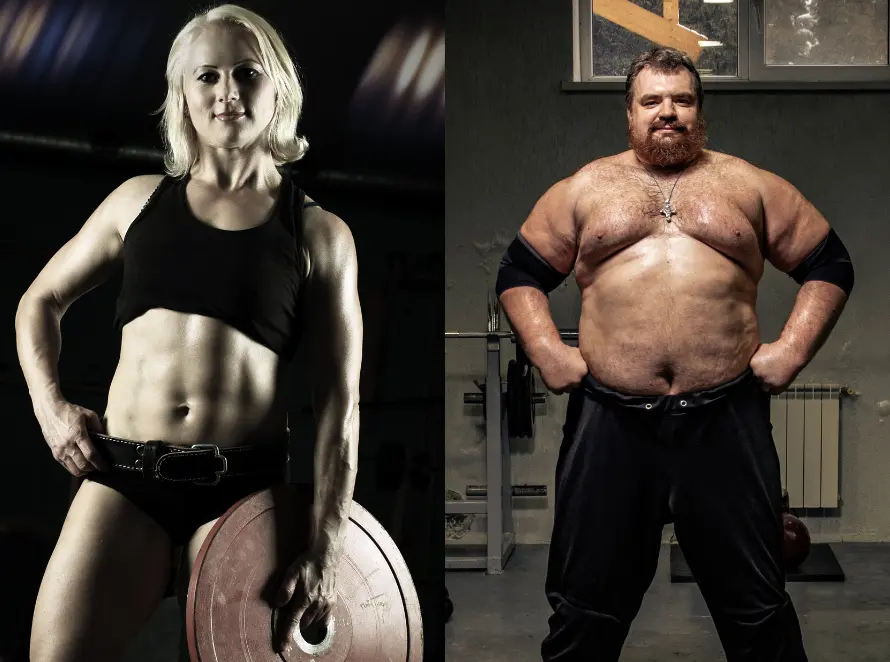
Quick Answer: Powerlifters typically develop a solid, muscular physique with exceptional strength but less defined muscle separation than bodybuilders. You can expect broad shoulders, thick legs, and a strong core—though visible abs may be less common due to higher body fat percentages (15-25% for men, 20-30% for women).
What Does a Powerlifter's Body Actually Look Like?
Powerlifters build functional strength, not show muscles. This creates a distinct look:
Key Physical Characteristics:
- Thick, dense muscle mass (especially in legs, back, and shoulders)
- Strong core development (often with less visible definition)
- Wider frame (broader shoulders and back from heavy lifting)
- Powerful legs (massive quads, hamstrings, and glutes)
- Less muscle definition than bodybuilders
- Higher body fat percentage (typically 15-25% for men, 20-30% for women)
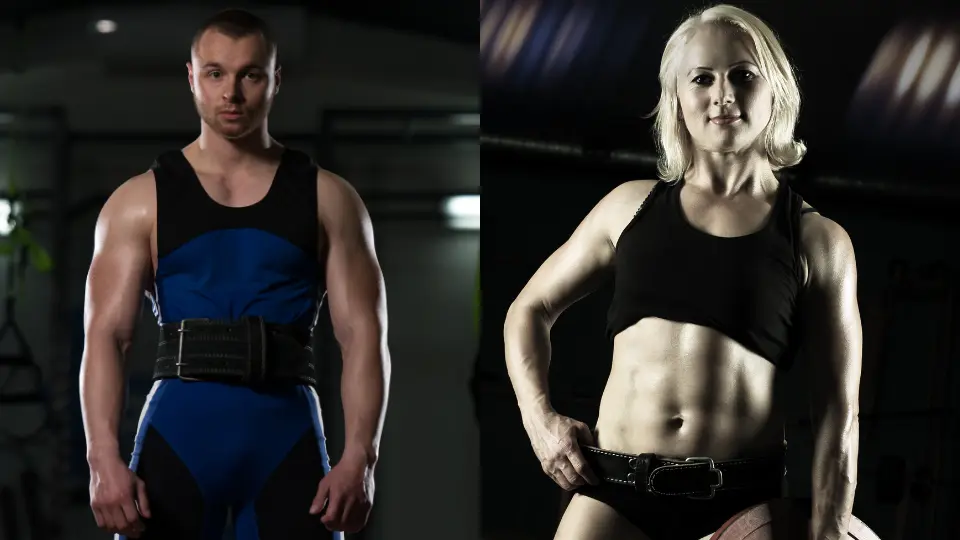
Why the difference? Powerlifters train for maximum strength in three lifts: squat, bench press, and deadlift. They don't focus on aesthetics or muscle definition like bodybuilders.
Will Powerlifting Give You a Good Physique?
Yes, but it depends on your definition of "good."
Powerlifting will give you:
- Impressive overall size and presence
- Thick, muscular legs and back
- Strong, developed shoulders
- Functional athletic appearance
- Confidence from real strength
Powerlifting may NOT give you:
- Six-pack abs (unless you diet specifically for this)
- The "shredded" bodybuilder look
- Symmetrical muscle development
- A lean, defined waistline
💡 The Bottom Line: If you want to look strong and powerful (and actually BE strong), powerlifting delivers. If you want Instagram-model aesthetics, you'll need additional work on body composition.
How Long Does It Take to See Results from Powerlifting?
Realistic Timeline:
| Timeframe | Physical Changes | Strength Gains |
|---|---|---|
| Weeks 1-4 | Minimal visible changes, some muscle "pump" | Technique improvement, neural adaptation |
| Months 2-3 | Noticeable muscle thickness in legs and back | 10-20% strength increase in main lifts |
| Months 4-6 | Clear physique changes, clothes fit differently | 25-40% strength increase from starting point |
| Months 7-12 | Significant transformation, muscular appearance | 50-75% strength gains, intermediate level |
| Year 2+ | Mature powerlifter physique | Advanced strength levels, slower progression |
Important factors affecting results:
- Your starting point (beginners see faster changes)
- Training consistency (3-5 sessions per week minimum)
- Nutrition quality (protein intake of 1.6-2.2g per kg bodyweight)
- Recovery habits (7-9 hours sleep, stress management)
- Age and genetics (natural variation exists)
Why Do Powerlifters Have Bellies? The Truth About Core Development
Short answer: It's not just fat—it's also muscle, organs, and training adaptations.
The Real Reasons:
1. Massive Core Musculature
Powerlifters develop incredibly thick abdominal and oblique muscles from:
- Heavy squats with bracing
- Maximal deadlifts requiring core stability
- Using lifting belts (which muscles push against)
2. Strategic Body Composition
Higher body fat percentages support:
- Increased strength capacity
- Better recovery between sessions
- Hormonal optimization
- Filling out weight classes
3. Internal Organ Enlargement
Heavy eating to fuel training can cause:
- Digestive system expansion
- Increased organ size
- More internal mass
4. Intra-Abdominal Pressure Training
Powerlifters practice the Valsalva maneuver:
- They brace their core hard under load
- This builds deep core muscles
- Surface abs become less visible
5. Weight Class Strategy
Many lifters intentionally stay heavier to:
- Compete in higher weight classes
- Maximize total strength potential
- Avoid difficult weight cuts
Important to Remember
A "powerlifter belly" doesn't mean they're unhealthy. Many have excellent cardiovascular fitness and metabolic health despite higher body fat.
What Muscle is Hardest to Grow?
Calves are notoriously the hardest muscle to grow, followed by forearms, rear deltoids, and hamstrings.
The Stubborn Muscles Ranked:
1. Calves (Hardest)
Why they won't grow:
- High percentage of slow-twitch fibers (less growth potential)
- Used constantly in daily walking (adapted to endurance)
- Small range of motion in exercises
- Strong genetic component
- Limited exercise variations
Growth strategies:
- Very high volume (15-30 reps, 4-6 sets)
- Multiple angles (standing and seated variations)
- Frequency (train 4-6x per week)
- Full range of motion with pause at stretch
- Progressive overload over years
2. Forearms
Why they resist growth:
- Small muscle groups
- Already well-developed from daily activities
- Limited exercise variety
- Responds slowly to training
Growth strategies:
- Heavy grip work (farmer's walks, dead hangs)
- Wrist curls and reverse curls
- Thick bar training
- High frequency training
3. Rear Deltoids
Why they lag:
- Hard to isolate properly
- Often under-trained
- Dominated by larger back muscles
- Poor mind-muscle connection
Growth strategies:
- Direct isolation work (face pulls, reverse flies)
- High volume (15-20 sets per week)
- Multiple angles and variations
- Frequent training (3-4x per week)
4. Hamstrings
Why they're difficult:
- Often dominated by quads
- Require specific exercises
- Poor activation patterns
- Genetic variation in response
Growth strategies:
- Romanian deadlifts (primary movement)
- Leg curls with various foot positions
- Nordic curls for eccentric overload
- Adequate volume (10-15 sets weekly)
For Powerlifters Specifically:
Muscles that tend to lag:
- Arms (triceps and biceps) - not prioritized in training
- Chest (upper portion) - bench press emphasizes middle/lower
- Calves - not directly trained
- Core definition - hidden by body fat
Muscles that grow easily:
- Quads (from squatting)
- Glutes (from squatting and deadlifting)
- Spinal erectors (from deadlifting)
- Upper back (from deadlifts and rows)
Is 150g of Protein a Day Enough to Build Muscle?
150g daily can build muscle, but it depends on your body weight. Use 1.6-2.2g per kg (0.7-1.0g per lb) bodyweight as your target.
Calculating Your Protein Needs:
Formula: Body weight (kg) × 1.6-2.2 = grams of protein daily
Examples:
| Body Weight | Minimum Protein | Optimal Protein | Maximum Benefit |
|---|---|---|---|
| 60kg (132lbs) | 96g | 120g | 132g |
| 70kg (154lbs) | 112g | 140g | 154g |
| 80kg (176lbs) | 128g | 160g | 176g |
| 90kg (198lbs) | 144g | 180g | 198g |
| 100kg (220lbs) | 160g | 200g | 220g |
Is 150g Enough?
YES for:
- People under 75kg (165lbs)
- Maintenance phases
- Recreational lifters
- Older adults (higher needs but lower intake tolerance)
MAYBE for:
- 75-85kg individuals (165-187lbs)
- Depends on training intensity
- May be suboptimal but acceptable
NO for:
- People over 85kg (187lbs)
- Serious muscle-building phases
- Competitive powerlifters
- Enhanced athletes (higher requirements)
Practical Protein Distribution:
If eating 150g daily (example meal plan):
Meal 1: Breakfast (35g)
- 3 whole eggs + 2 egg whites
- 1 slice whole grain toast
- Greek yogurt
Meal 2: Lunch (40g)
- 150g chicken breast
- Rice and vegetables
- Side salad
Meal 3: Snack (20g)
- Protein shake
- Banana
Meal 4: Pre-workout (20g)
- Greek yogurt
- Berries
Meal 5: Dinner (35g)
- 180g lean beef or fish
- Sweet potato
- Steamed vegetables
Beyond the Numbers:
Quality Matters:
- Prioritize complete proteins (meat, fish, eggs, dairy)
- Include variety of sources
- Time protein around training (pre/post workout)
- Distribute evenly across meals (25-40g per meal)
Protein isn't everything:
- Total calories matter more for muscle gain
- Carbs fuel training performance
- Fats support hormone production
- Sleep and recovery are critical
Is Strength Training Twice a Week Enough?
Twice weekly can maintain strength and muscle, but 3-4 sessions per week is optimal for continued progress.
What 2 Days Per Week Achieves:
Realistic Outcomes:
- Maintains current strength levels
- Preserves muscle mass during busy periods
- Prevents detraining
- Better than zero training
- Suitable for maintenance phases
Limitations:
- Slower progress than higher frequency
- Less optimal for beginners (need more practice)
- Reduced volume capacity
- May limit advanced progression
- Less muscle growth stimulus
Making 2 Days Work:
If training only 2x weekly, maximize effectiveness:
Option 1: Full Body Sessions
- Day 1: Squat, Bench, Row, Accessories
- Day 2: Deadlift, Overhead Press, Pull-ups, Accessories
Option 2: Upper/Lower Split
- Day 1: Lower Body (Squat, Deadlift, Accessories)
- Day 2: Upper Body (Bench, Row, Press, Pull-ups)
Optimization Strategies:
- Use higher volume per session (8-12 sets per muscle group)
- Train to near failure (RPE 8-9)
- Prioritize compound movements
- Minimize rest between sets
- Include supersets for efficiency
Who 2 Days Works For:
Good for:
- Very busy professionals
- Maintenance phases
- During periods of high life stress
- Recovery from injury
- Those with other athletic demands
NOT ideal for:
- Complete beginners (need more practice)
- Competitive powerlifters
- People focused on maximum muscle growth
- Those training for specific competitions
Progression Expectations (2 Days/Week):
Strength Gains:
- Beginners: 1-2% per month (very slow)
- Intermediate: 0.5-1% per month (minimal)
- Advanced: Maintenance only
Muscle Growth:
- 0.5-1.5lbs per month (suboptimal)
- Sufficient stimulus to prevent atrophy
- Better results with higher volume per session
Upgrading from 2 to 3+ Days:
Adding just one session (2→3) significantly improves results:
- 50% more weekly volume
- Better practice frequency
- More flexible programming options
- Improved recovery distribution
- Faster adaptation to training
Summary: Building Your Powerlifting Physique
Key Takeaways:
- Powerlifters develop thick, dense muscle mass with higher body fat (15-25% men, 20-30% women) compared to bodybuilders, creating a strong, powerful appearance
- Visible results take 3-6 months, with significant transformations occurring after 12+ months of consistent training at 3-5 sessions per week
- Diet determines body composition (70% nutrition, 30% training)—you control whether you look lean or bulky through calorie intake and protein targets
- The "powerlifter belly" results from massive core musculature, strategic body composition, internal organ changes, and intra-abdominal pressure training, not just excess fat
- Calves, forearms, rear deltoids, and hamstrings are the hardest muscles to grow, requiring specific strategies including high volume, frequency, and varied exercises
- Protein needs are 1.6-2.2g per kg bodyweight—150g daily is sufficient for those under 75kg but insufficient for larger athletes or serious muscle building
- Training twice weekly maintains strength but 3-4 sessions per week optimizes progress; frequency matters as much as total volume for continuous adaptation
- Progressive overload, adequate recovery (7-9 hours sleep), and patience are essential—the powerlifting physique is functional and impressive even if less defined than bodybuilding aesthetics
Frequently Asked Questions
Quick Reference Guide
You'll build strong core muscles, but abs visibility depends on body fat percentage (need <12% men, <20% women). Most powerlifters prioritize performance over visible abs.
6-12 months for noticeable physique changes, 2-3 years for the mature powerlifter build.
Yes—women can control their physique through diet while building impressive strength. "Bulkiness" comes from excess body fat, not muscle.
Beginners should eat at maintenance or slight surplus. Intermediate+ lifters can cycle between building phases (surplus) and cutting phases (deficit) based on goals.
No—whole foods, adequate protein, and consistent training are sufficient. Creatine monohydrate (5g daily) is the only supplement with strong evidence for strength gains.
2-3 sessions weekly of low-intensity cardio (walking, cycling) supports cardiovascular health and recovery without interfering with strength gains.
Yes, if you have a barbell, squat rack, bench, and plates. You need the ability to progressive overload the main lifts.
Ready to start building your powerlifting physique? Focus on these three pillars: consistent training with progressive overload, adequate nutrition with sufficient protein, and proper recovery with 7-9 hours of sleep. Results will come with patience and persistence.
Article length: ~4,500 words | Reading time: 18 minutes
Sources & Further Reading:
- Stronger By Science: Evidence-based strength training research
- Starting Strength by Mark Rippetoe: Foundation strength training
- PowerliftingToWin.com: Program reviews and technique guides
- International Powerlifting Federation (IPF): Competition standards
- American College of Sports Medicine (ACSM): Exercise guidelines